Toddler Nightmares: Quick Comfort Steps & Bedtime Fixes

What to Do When Your Toddler Has Nightmares: Comforting Steps and Bedtime Solutions
Nightmares can start in the toddler years and quickly turn bedtime into a stressful routine. A calm, predictable response helps a child feel safe in the moment while also reducing repeat wake-ups over time. Below are practical, parent-friendly steps for the middle of the night and the hours before bedtime so the whole household can get more rest.
Nightmares vs. Night Terrors: How to Tell the Difference
It’s easier to respond well when you know what you’re dealing with. Nightmares and night terrors can both look intense, but they behave differently.
| Feature | Nightmares | Night terrors |
|---|---|---|
| When it happens | Later night / early morning | First third of the night |
| Child awake? | Yes, fully awakens | Not fully awake; confused |
| Memory next day | Often remembers parts | Usually no memory |
| Best parent response | Comfort + reassurance + return to bed | Keep safe, minimal stimulation, wait it out |
Nightmares usually show up in the second half of the night, and your child wakes fully and seeks you out. Night terrors tend to happen earlier; a child may scream, look awake, and be hard to console, but won’t remember it in the morning. If your toddler can describe a scary dream and wants reassurance, treat it as a nightmare. If episodes are frequent, risky (climbing, thrashing), or paired with daytime sleepiness, consider discussing sleep patterns with a pediatrician. For more background, see the American Academy of Pediatrics overview.
What to Do in the Moment: A Calm, Repeatable Nighttime Script
When a toddler is scared at night, the goal is safety and simplicity—not a big conversation. Try using the same “mini script” each time so it becomes familiar and calming.
- Go to your child quickly, but keep lights low to avoid fully “resetting” their sleep drive.
- Use a steady voice and short phrases: “You’re safe. It was a scary dream. I’m here.”
- Offer grounding: name the room (“We’re in your bedroom”), hand them a favorite blanket, offer a sip of water, and take 3–5 slow breaths together.
- Avoid detailed questioning about the dream; it can intensify images and keep them awake longer.
- Return to the bed routine: brief cuddle, tuck-in, same closing line every time, then step back.
- If separation anxiety spikes, use timed check-ins (return in 2 minutes, then 5) rather than staying indefinitely.
If you feel yourself getting pulled into bargaining (“Just one more hug, one more light, one more story”), pause and go back to your “boring” baseline: safe, calm, consistent, and brief.
Comfort Without Creating a New Sleep Crutch
Comfort is the point—but some comfort strategies accidentally teach, “If I wake up, I get a whole new sleep routine.” Choose one plan you can repeat and stick with it for 1–2 weeks so your toddler knows what to expect.
- Try independence-friendly comfort tools: a warm-toned nightlight, a lovey, or soothing music on a timer.
- Decide ahead of time how your family handles requests to sleep in your bed; inconsistency often increases night visits.
- If co-sleeping happens occasionally, keep a clear, boring rule: child starts in their bed; if they come in, no play/talking; return them at the first calm moment.
- In the morning, praise coping (“You were scared and you calmed your body”) rather than spotlighting the scary content.
Daytime and Pre-Bed Triggers That Make Nightmares More Likely
Nightmares often spike when a toddler’s brain is overloaded—by fatigue, big feelings, or stimulating content.
For additional guidance on nightmares and related sleep disruptions, the NHS discussion of night terrors and nightmares is a helpful reference.
A Bedtime Routine That Reduces Fear and Night Wake-Ups
| Step | Option A | Option B | Keep it brief |
|---|---|---|---|
| Wind-down | Dim lights + quiet toys | Calm music + puzzles | 10 minutes |
| Connection | Child-led play | Cuddle + chat | 10 minutes |
| Story | One comfort book | Two short books | 5–10 minutes |
| Lights-out | Same phrase + tuck-in | One song + tuck-in | 1–3 minutes |
When to Get Extra Help
Practical Tools and Guided Scripts for Parents
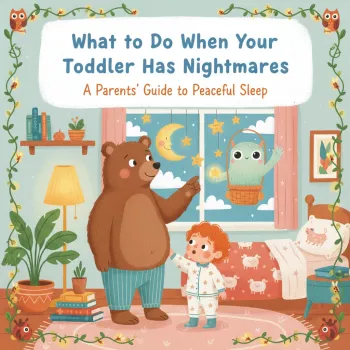
- What to Do When Your Toddler Has Nightmares | Ebook Guide for Parents | Practical Comforting Tips & Bedtime Solutions
- Elegant Ribbon Bow Pearl Keychain (a simple “bravery token” you can clip to a backpack or key ring and reference during your bedtime comfort phrase)
- Diadora Men’s White Sneakers (when caregivers are better rested, daytime movement and outdoor walks can help lower evening stress for everyone)
FAQ
How long do nightmares last in toddlers?
Nightmares often come in phases that flare up for a few weeks and then ease. A consistent bedtime routine and a calm, repeatable response at night usually reduce how often they happen, especially when you address overtiredness, stress, or intense media.
Should a toddler talk about the nightmare the next day?
A quick check-in can help: name the feeling, reassure safety, and move on. Skip detailed rehashing and instead practice a coping skill (a “safe ending” story, drawing the scary thing and then drawing it getting smaller, or a simple breathing game).
Is a nightlight helpful or does it make sleep worse?
A dim, warm light helps many toddlers feel secure without waking them fully. Keep it low and avoid bright or blue-toned lights; if it turns into playtime, use a softer light or one with a timer.















Leave a comment