Countertop Dishwasher with Water Tank: Cycles & Setup
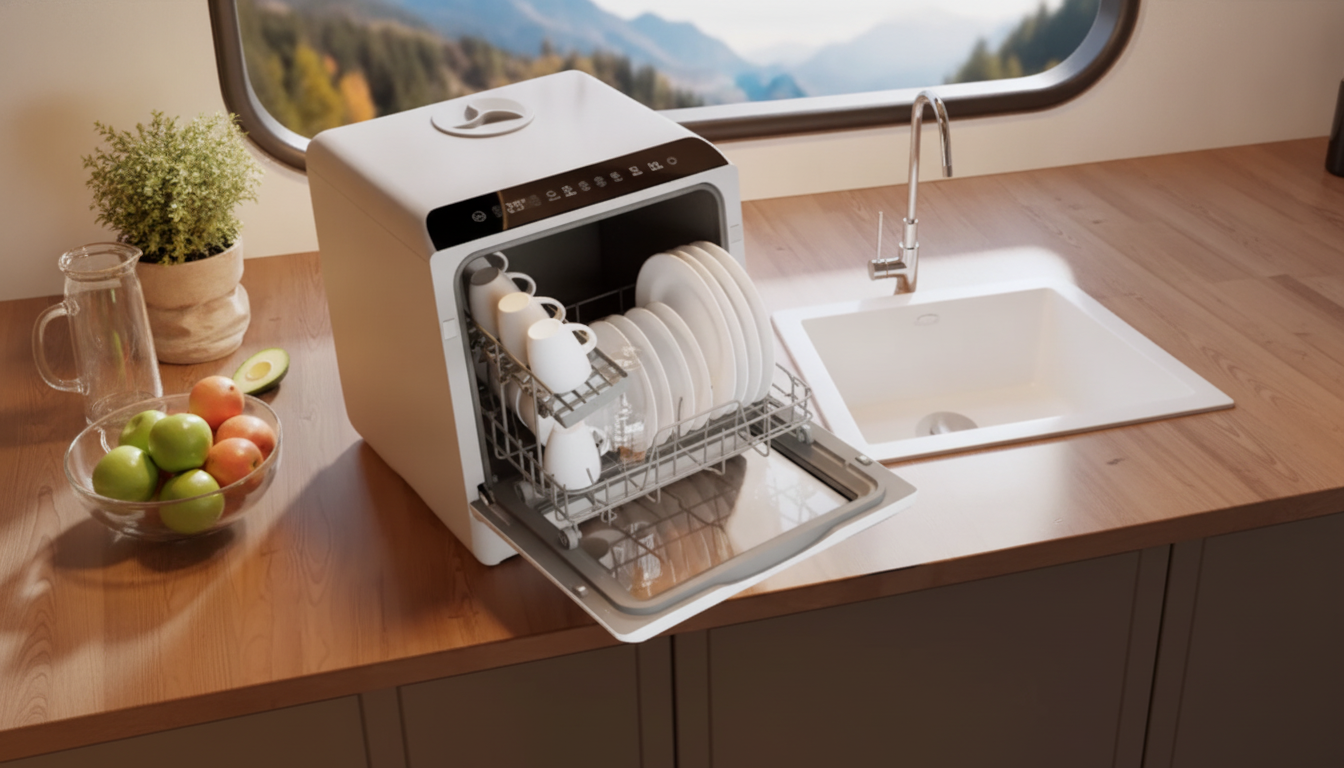
Compact Countertop Dishwasher with Built-in Water Tank & Multiple Washing Programs
A countertop dishwasher with a built-in water tank is designed for small spaces where a permanent water hookup isn’t convenient. With multiple wash programs, it can handle everything from lightly used cups to greasy plates while keeping setup and daily use straightforward for apartments, dorms, RVs, and busy kitchens.
What Makes a Built-in Water Tank Dishwasher Different
Most countertop dishwashers expect a sink connection, but tank-equipped models add flexibility. They typically run in two ways: you can manually fill the internal tank, or connect to a faucet when that option is available. That means the dishwasher can live where a hookup is awkward—like a studio kitchenette—or move with you between rentals.
The built-in tank is especially helpful in places with restrictive plumbing rules, older kitchens without easy access to a compatible faucet, temporary living setups, and secondary kitchens in basements, offices, or workshops. The trade-off is straightforward: compact units hold fewer place settings than full-size dishwashers, so you’ll empty dishes more often, and tank mode requires refilling before each cycle (or each back-to-back load).
Performance expectations are realistic but impressive when used correctly. The best results come from smart loading (don’t block spray arms), matching the wash program to the mess level, and keeping the filter clean so water pressure stays strong.
Best-Fit Use Cases
- Small households: Great for one to two people generating a steady stream of plates, mugs, glasses, and utensils.
- Space-limited homes: Useful when there’s no room for a built-in dishwasher or when it’s easier to spare counter space than cabinet space.
- Mobile and temporary setups: Helpful for RV living, tiny homes, and short-term rentals where an appliance can move with the owner.
- Supplemental cleaning: Handy as an overflow option during gatherings, or for separating baby items, pet bowls, or food-prep tools from regular loads.
Core Features to Look For
Built-in water tank access
Look for a fill method that’s easy to reach and hard to spill—top-fill or front access can both work, as long as the opening is practical and the cap/door seals securely.
Multiple washing programs
Drying approach
Interior layout and controls
Safety basics
Washing Programs: When to Use Each One
| Program | Best for | Tips to improve results |
|---|---|---|
| Heavy/Intensive | Greasy plates, cooked-on residue | Avoid stacking; face soiled surfaces toward spray; use the hottest program only when needed |
| Normal/Daily | Mixed everyday dishes | Scrape solids; place bowls at an angle to drain; keep spray arms clear |
| Eco | Light to moderate soil when time is flexible | Expect longer run time; use rinse aid for better drying |
| Glass/Delicate | Wine glasses, delicate ceramics | Use a gentle detergent amount; keep items from touching to prevent chips |
| Quick/Express | Lightly used cups and plates | Best right after use; skip for starchy or greasy loads |
| Rinse/Pre-rinse | Holding cycle before a full wash | Do not use detergent; follow with a full wash later |
Setup Options: Tank Fill vs. Faucet Connection
Tank fill workflow
Faucet connection workflow
Placement checklist
Capacity, Loading, and What Typically Fits
Water Use, Energy Use, and Everyday Noise
Compact dishwashers often use less water than handwashing a similar load—especially when you run full cycles instead of rinsing everything under a running tap. For general efficiency guidance, ENERGY STAR’s dishwasher resources can help set expectations for water and energy use: https://www.energystar.gov/products/appliances/dishwashers.
Maintenance That Keeps Performance Consistent
- Filter care: Remove and rinse the filter regularly to prevent odors and maintain spray pressure.
- Spray arm inspection: Clear debris from spray holes and confirm the arms spin freely.
- Descaling routine: In hard-water areas, mineral buildup is common—use a dishwasher-safe descaler as needed and consider rinse aid to reduce spotting. For broader water-efficiency context, see EPA WaterSense basics: https://www.epa.gov/watersense.
- Detergent and rinse aid: Use automatic dishwasher detergent only (never hand soap) and adjust dosage to avoid residue.
- Exterior and seals: Wipe door edges and seals to reduce grime and help prevent leaks.
Common Issues and Quick Fixes
Product Spotlight: Compact Countertop Dishwasher with Built-in Water Tank & Multiple Washing Programs
If the goal is dishwasher convenience without permanent installation, Compact Countertop Dishwasher with Built-in Water Tank & Multiple Washing Programs stands out for combining a compact footprint, flexible tank operation, and program options that match different soil levels and dish types.
Before ordering, measure countertop space and door clearance, plan a drain route to a sink or suitable drain point, and decide whether you’ll primarily use tank fill or a faucet hookup. For everyday hygiene guidance around cleaning routines and surfaces, see the CDC’s cleaning recommendations: https://www.cdc.gov/hygiene/cleaning/index.html.
More In-Stock Picks
FAQ
Can a countertop dishwasher work without a sink hookup?
Yes. In tank-fill mode, you manually fill the built-in reservoir, so the dishwasher can run without a faucet connection, but the drain hose typically still needs to route to a sink or an appropriate drain point. Verify you have a safe, kink-free drain path and a level surface before running cycles.
Do multiple wash programs actually matter for a compact dishwasher?
Yes—different programs help match spray intensity, temperature, and time to what you’re washing. Heavy cycles target greasy, baked-on residue, while Eco and Quick are better for lighter soil levels (with Eco usually taking longer to save water/energy).
What detergent should be used in a compact countertop dishwasher?
Use automatic dishwasher detergent (pods, powder, or gel—whichever the unit supports) and never use hand dish soap. If you have hard water, rinse aid and periodic descaling can help reduce spots and cloudy residue.














Leave a comment