Study Skills Mastery: Focus Routine, Memory & Results
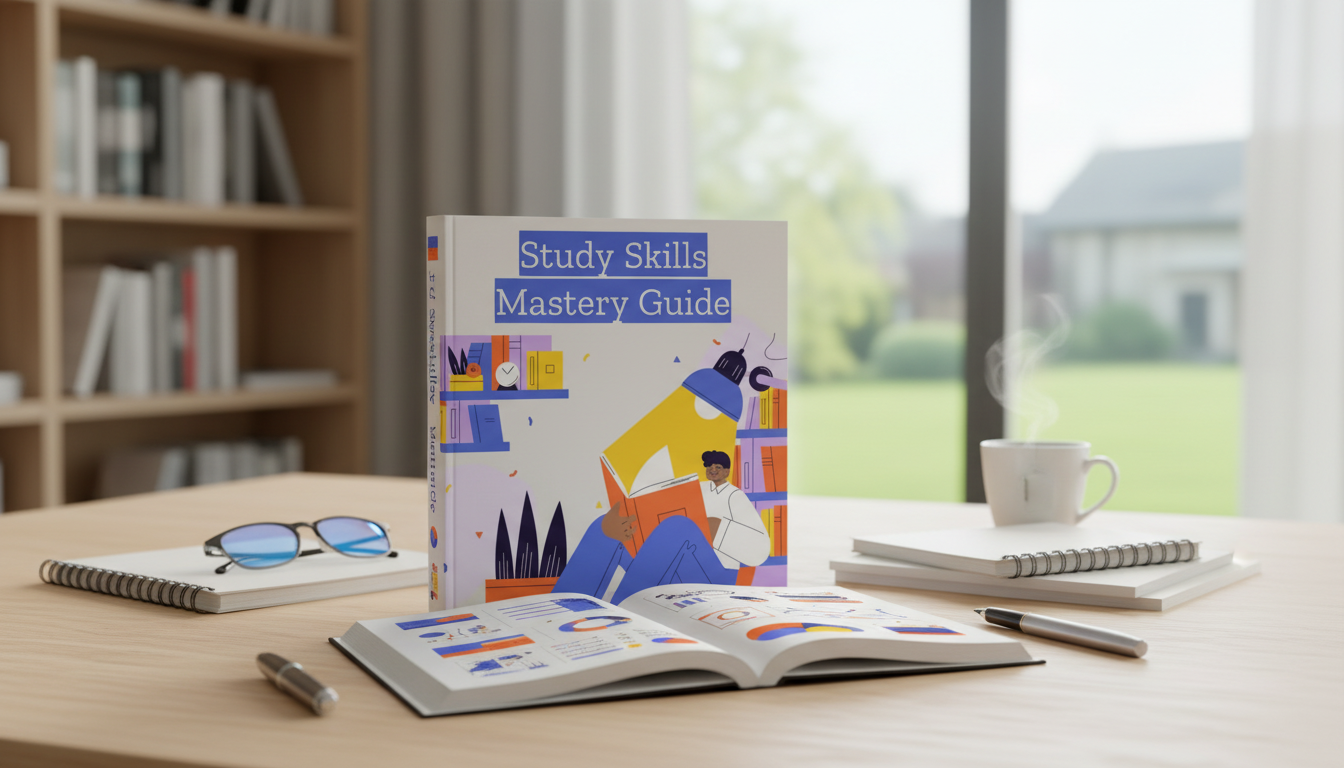
Study Skills Mastery Guide: Build a Focused Routine, Stronger Memory, and Better Results
Better grades rarely come from longer hours—they come from smarter systems. A solid study routine reduces stress, improves consistency, and turns “I studied a lot” into “I learned it.” The Study Skills Mastery Guide is a digital resource built around practical learning strategies, focus tools, memory techniques, and a ready-to-use study checklist PDF that helps structure classes, homework, and exam prep into a repeatable routine.
Who this guide helps (and when it’s most useful)
This approach is designed for real schedules and real attention limits—not perfect days.
- Middle school, high school, college, and adult learners who want a clearer study routine
- Students who struggle with procrastination, distraction, or inconsistent follow-through
- Anyone preparing for exam weeks, finals, standardized tests, certifications, or heavy reading courses
- Learners who want a practical checklist they can print or use on a tablet
- Busy schedules: athletes, working students, commuters, and online learners who need structure
Set up a study system that fits real life
A strong system makes starting easier and finishing more likely. Instead of relying on motivation, build a setup that lowers friction.
- Choose a consistent start time and a short “setup ritual” (water, materials, notifications off, one task chosen)
- Use a weekly plan: identify fixed commitments first, then assign study blocks to specific subjects
- Aim for “minimum viable sessions” on busy days (even 15–25 minutes) to keep momentum
- Create a dedicated study environment: lighting, noise control, and a single device policy during deep work
- Track what works: a simple log of session length, topic, and one takeaway improves future planning
Quick setup checklist for a distraction-resistant study session
| Step | What to do | Why it matters |
|---|---|---|
| Clear the space | Keep only the materials needed for the next task | Reduces visual distractions and task switching |
| Pick one objective | Define a finish line (e.g., 20 practice problems or one chapter summary) | Prevents vague studying and improves completion |
| Block distractions | Silence phone, close extra tabs, use website blockers if needed | Protects attention and lowers mental fatigue |
| Work in intervals | Use timed focus blocks with short breaks | Maintains energy and supports consistency |
| End with a review | Write 3 key points + next step | Improves retention and makes tomorrow easier |
Focus strategies that actually stick
Focus isn’t about forcing willpower—it’s about designing fewer chances to drift.
- Use time-blocking for attention: set a start time, end time, and a single outcome for each block
- Try a “two-minute start” to break procrastination: begin with the smallest action (open notes, write headings, solve first problem)
- Reduce task switching: batch similar tasks (reading + notes, then practice questions, then review)
- Turn passive time into active learning: replace re-reading with self-quizzing or explaining concepts out loud
- Design breaks intentionally: short movement or water breaks, not social media spirals
- If motivation drops, switch to a low-friction task that still moves the subject forward (flashcards, quick recap, error log)
Study methods that improve understanding, not just effort
Time-on-task helps, but method choice matters more. Techniques like retrieval practice and practice testing consistently outperform passive review for long-term learning.
- Active recall: close the notes and retrieve key ideas from memory, then check accuracy
- Spaced practice: revisit material across days instead of cramming to increase long-term retention
- Interleaving: mix problem types or topics after basics are learned to build flexible skills
- Elaboration: ask “why does this work?” and connect new information to what’s already known
- Practice testing: use quizzes, past exams, or self-made questions to diagnose gaps early
- Error logs: record missed questions, the reason, and the correct method to prevent repeat mistakes
For a deeper look at why these work, see research summaries on retrieval practice from the American Psychological Association, the widely cited review by Dunlosky et al. (2013), and evidence on practice testing benefits (PNAS).
Memory techniques for faster recall
Memory improves when information is organized, connected, and retrieved repeatedly—especially in more than one format.
- Chunking: group information into meaningful sets (steps, categories, patterns)
- Mnemonics: acronyms, acrostics, or vivid phrases for lists and sequences
- Visualization: turn facts into images, diagrams, or mental “scenes” for better retrieval
- Dual coding: pair words with simple sketches, timelines, concept maps, or labeled diagrams
- Teach-back method: explain the concept as if tutoring someone; gaps become obvious quickly
- Sleep and memory: review briefly before sleep and avoid all-night cramming when possible
A simple weekly routine for exam week (without burnout)
What’s included in the Study Skills Mastery Guide (digital download)
Get the full download here: Study Skills Mastery Guide (digital download).
How to use the checklist PDF in 10 minutes
Helpful add-ons for a smoother routine (optional)
- Smart Home Robot Vacuum Cleaner with Mop & Automatic Dust Collection for keeping a study area tidy with less effort
- Multi-Function Electric Waffle & Hot Pot Cooker with Steamer for quick meals during busy school weeks
FAQ
What’s the difference between a digital study guide and a regular study planner?
A digital study guide teaches learning methods (how to study) and often includes tools like checklists, while a planner mainly schedules tasks (when to study). Using both together usually works best: the planner holds the time blocks, and the guide improves what happens inside them.
How long should a study session be to actually retain information?
Many students do well with 25–50 minute focus blocks plus short breaks, but retention depends more on active recall and spaced review than on longer sessions. On low-energy days, a 15–25 minute “minimum viable session” can still maintain momentum.
Can these study methods work for ADHD or frequent distractions?
They can be adapted in supportive, practical ways—shorter timed blocks, a consistent start ritual, one clear task goal, and an environment that removes easy distractions. A checklist helps externalize steps so less is left to memory in the moment.















Leave a comment