Indoor Cat Enrichment: DIY Toys, Play Routine & Home
Enrichment Ideas for Indoor Cats: DIY Toys, Daily Play Routines, and a Cat-Friendly Home
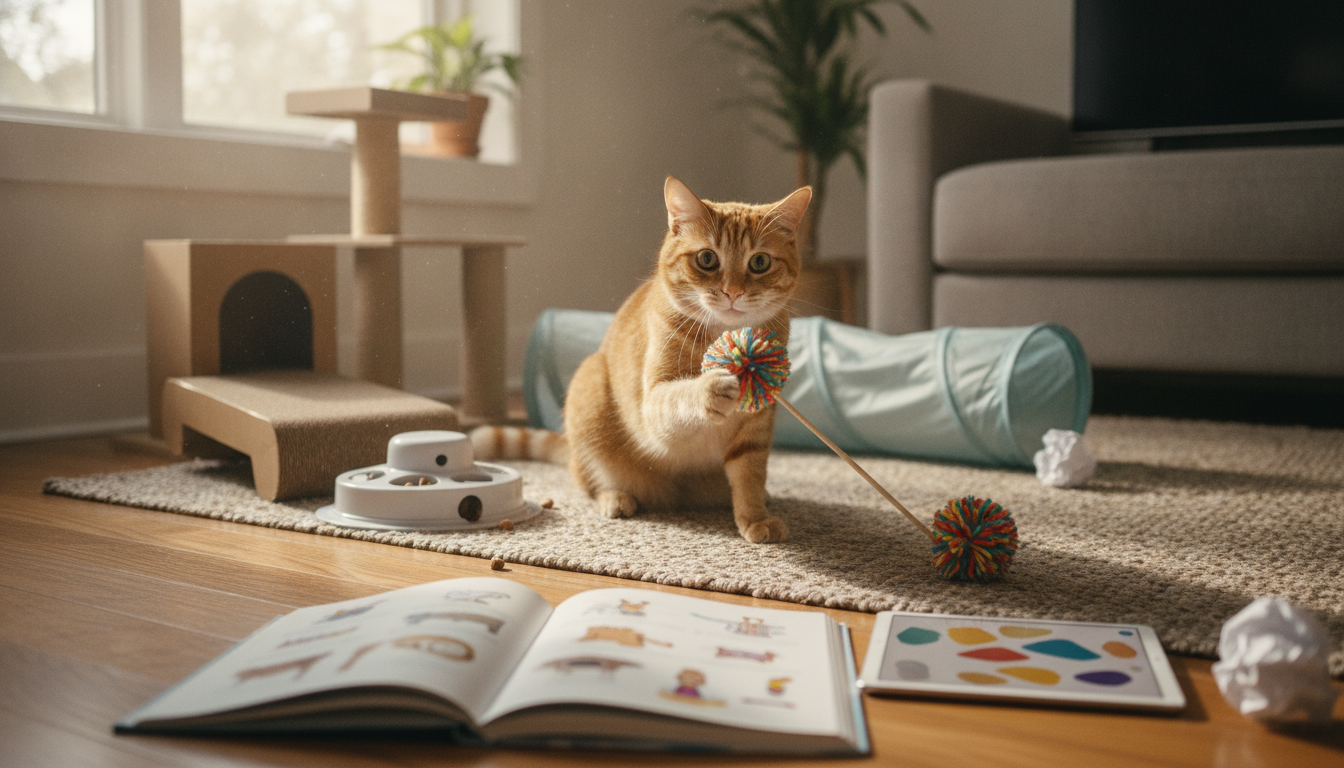
Indoor cats thrive when their days include hunting-style play, problem-solving, safe climbing, and calm recovery time. A simple plan—rotating toys, setting predictable play windows, and enriching the home environment—can reduce boredom behaviors like overgrooming, nighttime zoomies, and attention-seeking. The ideas below focus on practical, low-cost upgrades plus an optional printable guide to make routines easy to follow.
Start With the Basics: What “Enrichment” Should Provide
The best enrichment doesn’t have to be complicated—it just needs to meet your cat’s core needs consistently.
- Hunt-catch-eat cycle: Offer short bursts of stalking and pouncing, then finish with a meal or treat so the “hunt” feels complete.
- Vertical territory: Cat trees, sturdy shelves, and window perches give cats safe high ground, which often boosts confidence and reduces stress.
- Choice and control: Multiple nap spots, more than one litter box option (when possible), and predictable quiet zones help cats feel secure.
- Sensory variety: Rotate textures and cat-safe scents, and create viewing stations (windows, screened porches) without overwhelming your cat.
- Social and solo options: Interactive play with you matters, but so do independent activities for workdays and busy hours.
For deeper guidance on how environment influences feline behavior and wellbeing, the AAFP Feline Environmental Needs Guidelines and International Cat Care’s enrichment advice are excellent references.
A Simple Weekly Enrichment Plan (Rotate, Don’t Overload)
Instead of leaving every toy out all the time, aim for a repeatable rhythm. Novelty increases when toys “disappear” and return later.
- Choose 3–5 toys to keep out for 3–4 days; store the rest to keep interest high.
- Schedule 2 short play sessions daily (5–12 minutes each) rather than one long session.
- Pair evening play with a small meal to encourage post-play relaxation.
- Add one “new” element weekly: a paper bag maze, a box fort, or a different puzzle feeder setting.
- Track what works: favorite wand attachments, best times of day, and signs of overstimulation (tail lashing, sudden biting).
7-Day Indoor Cat Enrichment Rotation (Example)
| Day | Interactive Play (5–12 min) | Solo Enrichment | Home Upgrade |
|---|---|---|---|
| Mon | Wand toy: low, slow “mouse” movements | Treat scatter in a snuffle mat/towel | Open a window perch with a safe screen |
| Tue | Laser (end with a toy “catch”) | Cardboard box with crinkle paper | Move a cat tree to face the window |
| Wed | Feather wand: jump-and-pounce | Puzzle feeder (easy setting) | Add a scratcher near a nap spot |
| Thu | Chase game down a hallway (toy on string) | Paper bag maze (handles removed) | Refresh water station/fountain location |
| Fri | Kick toy wrestling + gentle tug | Scent enrichment: silvervine/catnip rotation | Create a quiet “hide” nook |
| Sat | “Bird” play: high perches + wand | Food hunt: tiny treats in 5–6 locations | Swap in a new scratching texture |
| Sun | Calm play: slow lure + final catch | Lick mat or freeze-dried treat puzzle | Reset toy rotation for next week |
DIY Toys That Encourage Natural Behaviors
DIY toys work best when they’re simple, replaceable, and designed for the way cats naturally hunt, bat, and “bunny kick.”
- Sock kicker: Fill a sock with crinkle paper and a pinch of catnip or silvervine; knot tightly. Supervise if your cat chews fabric.
- Cardboard “prey” tubes: Cut paper towel rolls into rings, hide a few treats inside, and toss for batting.
- Box fort with peek holes: Use sturdy boxes, cut smooth-edged windows, and connect with paper-bag tunnels (remove handles).
- Towel snuffle: Sprinkle kibble in a folded towel and roll it loosely; increase difficulty gradually as your cat learns.
- Ice cube “bob” toy: Freeze a few treats in water for supervised batting on a tray (skip for cats that hate cold paws).
Play Routines That Reduce Zoomies and Attention-Seeking
Cat-Friendly Home Tips: Set Up “Zones” That Make Life Interesting
Safety Notes: Make Enrichment Low-Risk
- Supervise string, ribbon, and elastic toys; store them after interactive play.
- Avoid small parts that can be swallowed; replace damaged toys promptly.
- Use only cat-safe plants and keep toxic houseplants out of reach. For hazard awareness, see the ASPCA poison control resources.
- Introduce new items gradually if your cat is anxious; let them investigate at their own pace.
- If you see major behavior changes (inappropriate urination, sudden aggression, appetite shifts), rule out medical issues with a veterinarian.
A Printable Plan for Consistency (Optional)
- Printable cat enrichment guide with DIY toy ideas and play routines to rotate toys, schedule short play sessions, and log preferences.
- Keep pages near the feeding station so play, puzzles, and meals naturally flow together.
- Use quick prompts for solo enrichment on workdays and slightly longer sessions on weekends.
If you like having small essentials easy to grab (keys, clicker, treat pouch clip), the Elegant Ribbon Bow Pearl Keychain can be a simple way to keep your “cat time” items in one spot.
FAQ
How much play does an indoor cat need each day?
Most indoor cats do well with about 10–30 minutes total per day, split into 2–3 short sessions. Kittens and high-energy cats often need more, while seniors may prefer gentler, shorter rounds followed by a small meal or treat.
What are easy enrichment ideas when there isn’t much time?
Try a 3–5 minute wand session, a quick treat scatter in a towel, or serving a meal in a puzzle feeder. Rotating in one “new” item—like a paper bag maze or a fresh box—can add novelty with almost no setup.
Is catnip safe for all cats?
Catnip is generally safe in small amounts, but many cats won’t react to it at all, and some get overly excited. If your cat doesn’t enjoy it, silvervine is a common alternative; whichever you use, offer it occasionally and remove it if play gets too intense.















Leave a comment