Vacuum Anxiety in Pets: Calm Dogs & Cats with Training
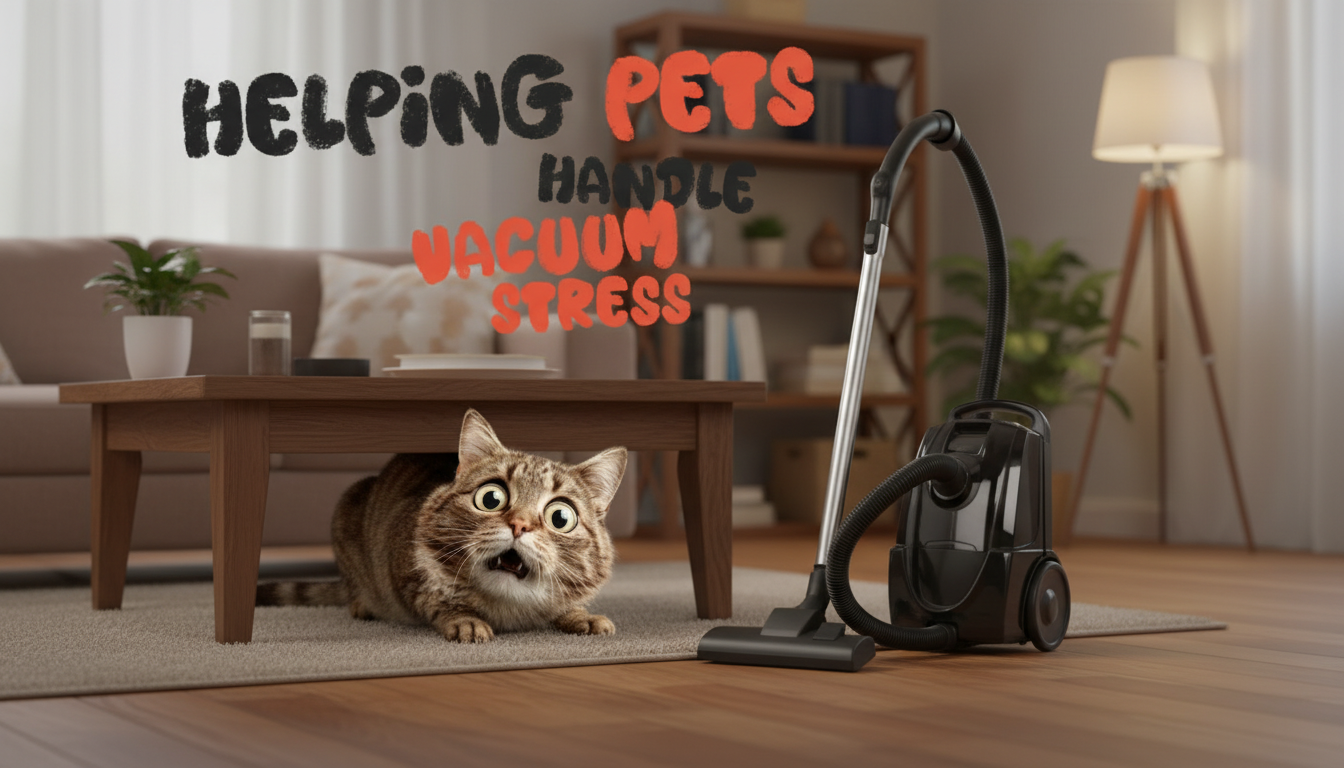
Helping Pets Handle Vacuum Stress: Calmer Cleaning for Dogs and Cats
Vacuum cleaners combine loud noise, sudden movement, unfamiliar scent, and floor vibrations—an intense mix for many pets. With a few changes to the environment, a gradual training plan, and the right tools, most dogs and cats can learn to stay relaxed (or at least feel safe) while floors get cleaned.
Why vacuums can feel scary to pets
To humans, a vacuum is just a chore. To a dog or cat, it can look and sound like a fast, unpredictable threat.
- Noise sensitivity: high-pitched motor sounds and sudden start/stop cycles can be alarming, especially in echo-y rooms.
- Movement pattern: a large object “chasing” across the floor may trigger prey/predator instincts or herding/chase behaviors.
- Vibration and airflow: rumbling floors, air blasts, and shifting dust can startle pets who rely heavily on hearing and scent.
- Past experiences: being cornered, slipping on hard floors, or accidentally bumped can create lasting fear.
- Individual factors: puppies/kittens in fear periods, seniors with hearing/vision changes, and anxious temperaments may react more strongly.
Stress signals to watch for (and when to pause)
Vacuum training works best when it stays under a pet’s “panic threshold.” If stress ramps up too far, learning shuts down.
- Mild: lip licking, yawning, turning head away, sudden grooming (cats), tense posture.
- Moderate: panting, pacing, hiding, whining, tail tucked, ears pinned back, dilated pupils.
- Severe: trembling, growling/hissing, snapping, bolting, urinating/defecating, refusing food for hours after.
- Rule of thumb: if your pet cannot take treats or disengage from the vacuum, the session is too intense.
- Safety first: prevent bites/scratches by creating distance and avoiding cornering.
Set up a safe “cleaning routine” before the vacuum turns on
A predictable pre-vacuum routine helps pets feel in control. The goal is not to “tough it out,” but to build a repeatable pattern: cue, relocate, reward, and then clean.
- Create a predictable cue: say a consistent phrase (e.g., “vacuum time”) and guide your pet to a comfort area.
- Offer distance and a barrier: a bedroom, crate, baby gate, or cat tree in a separate room gives a clear boundary.
- Add calming inputs: white noise, a fan, or low music can mask the sharpest peaks in vacuum sound.
- Use high-value rewards: long-lasting chews for dogs; lick mats (pet-safe) or food puzzles; for cats, treat scatter or a lickable treat.
- Reduce triggers: close doors to limit chase opportunities; keep the vacuum cord out of reach; avoid vacuuming directly toward the pet.
If you want a structured, repeatable plan that pairs routine-building with gradual exposure, consider Helping Pets Handle Vacuum Stress to keep the steps consistent from session to session.
Step-by-step training plan (desensitization and counterconditioning)
Desensitization means making the vacuum “small enough” to handle. Counterconditioning means pairing vacuum sights/sounds with something your pet loves. Keep sessions short (often 1–3 minutes), end on success, and repeat over days.
| Stage | Vacuum setup | Pet’s job | Goal to advance |
|---|---|---|---|
| 1 | Vacuum visible, unplugged | Look, sniff, disengage | Can relax nearby and take treats |
| 2 | Vacuum moved gently, still off | Watch calmly, choose distance | No hiding or frantic escape attempts |
| 3 | Vacuum on briefly, separated by door | Eat/lick during sound | Returns to neutral quickly after it stops |
| 4 | Vacuum on in same room, far away | Settle on mat/bed | Can stay settled through short passes |
| 5 | Normal vacuuming in sections | Relax in safe area | Minimal stress signals and quick recovery |
Adjust the cleaning method to reduce stress
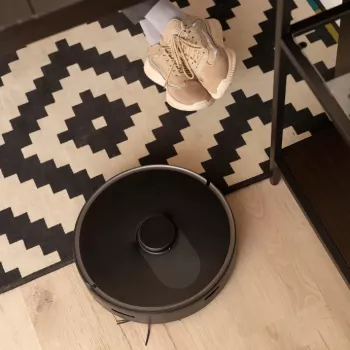
If automated cleaning fits your home, the Smart Home Robot Vacuum Cleaner with Mop & Automatic Dust Collection can help you keep a consistent schedule—just introduce it the same way you would any new moving object: stationary first, then short runs, then longer cycles.
Calming aids and when to consult a professional
For deeper behavior guidance, these references are helpful: American Veterinary Society of Animal Behavior (AVSAB) – Position Statements, ASPCA – Dog Behavior and Training Resources, and RSPCA – Pet Behaviour and Training Advice.
Tools that can make vacuum days easier
- Pair products with a plan: a focused training-and-routine approach can be paired with a dedicated guide like Helping Pets Handle Vacuum Stress to keep timing, rewards, and progression consistent.
- Automated options: a robot vacuum can be introduced with the same gradual approach—start stationary, then short runs, then full schedules.
- Go slow on purpose: the best tool is the one that allows consistency without triggering fear, even if progress is measured in tiny steps.
FAQ
How long does it take for a pet to get used to the vacuum?
Many pets improve in days to a few weeks with short, frequent sessions, but severe fear can take longer. Progress depends on staying below the fear threshold and building positive associations gradually.
Should a scared pet be comforted during vacuuming?
Calm reassurance is fine, but focus on creating distance and safety rather than trying to soothe panic in the moment. Pair the sound with rewards and give your pet a clear exit route so they can relax.
Is a robot vacuum less stressful for pets than a regular vacuum?
Often it can be, since many models are quieter and more predictable, but it’s still a moving object that can worry some pets. Introduce it gradually and run it while pets are settled in a separate safe area at first.













Leave a comment