Beat Overwhelm: Pomodoro + Eisenhower + Time Blocking
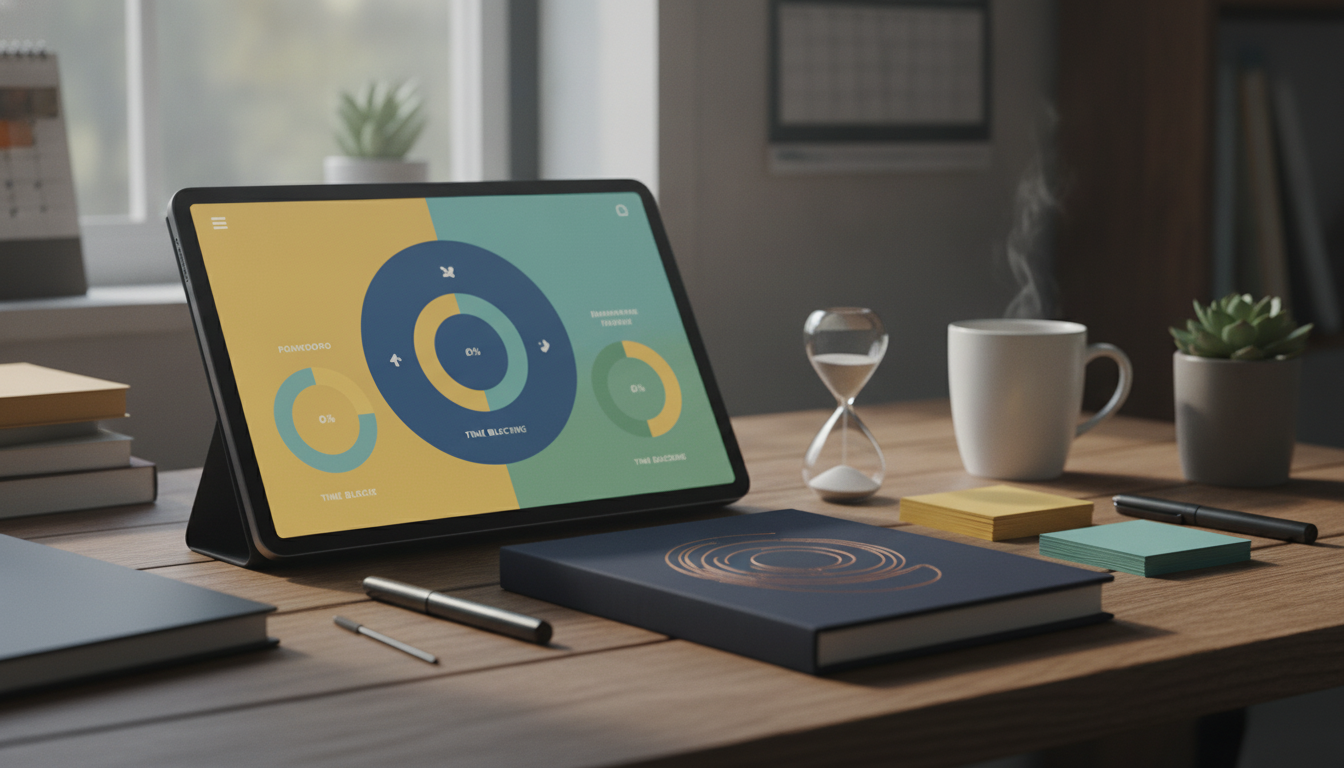
More Time, Less Stress: A Practical System Using Pomodoro, the Eisenhower Matrix, and Time Blocking
Days get crowded when priorities are unclear, tasks expand to fill every gap, and attention gets pulled in too many directions. A simple system built on three proven tools—Pomodoro for focus, the Eisenhower Matrix for prioritizing, and time blocking for planning—can reduce overwhelm and make progress feel predictable. For more guidance, see 9 Proven Time Management Techniques and Tools | USAHS.
What “more time” actually looks like in a busy week
- Fewer open loops: tasks captured in one place instead of living in the head
- Clear daily “must-dos” based on importance, not urgency noise
- Protected focus windows with intentional breaks
- Buffer time for interruptions, admin, and recovery
- A consistent shutdown routine that prevents tomorrow’s stress from starting tonight
Start with a reset: capture, sort, and choose outcomes
The fastest way to feel less scattered is to stop relying on memory. A short reset turns “everything” into a list you can actually manage. For further reading, see Boosting productivity and wellbeing through time management.
- Do a quick brain dump: list every task, worry, and commitment without organizing yet
- Group items into projects (multi-step) vs. single actions (one-step)
- Pick 1–3 outcomes for the week (measurable, specific), then connect daily tasks to those outcomes
- Create a short “next actions” list that is small enough to finish
- Set a daily limit for priority tasks to prevent overplanning (often 3–5 is realistic)
Prioritize with the Eisenhower Matrix (so urgency stops running the calendar)
Before planning the day, decide what deserves your best attention. The Eisenhower Matrix is a simple “filter” that prevents last-minute noise from consuming your schedule. For an overview of the four quadrants, see Mind Tools’ guide to the Eisenhower Matrix.
- Important + urgent: handle first, but investigate why it became urgent
- Important + not urgent: schedule it; this is where long-term progress lives
- Not important + urgent: delegate, automate, or reduce quality expectations
- Not important + not urgent: delete or quarantine to a “later” list
- Use the matrix to say “not now” with confidence—every yes has a time cost
How each method supports a calmer, more productive day
| Tool | Best for | How to use it | Common pitfall | Quick fix |
|---|---|---|---|---|
| Pomodoro | Starting and finishing focused work | 25 minutes work + 5 minutes break (repeat), then a longer break | Using it for reactive inbox work all day | Reserve Pomodoros for priority tasks; batch admin separately |
| Eisenhower Matrix | Choosing what matters before planning time | Sort tasks into 4 quadrants (important/urgent) | Marking everything as urgent | Limit “urgent” to true deadlines and consequences |
| Time blocking | Turning priorities into a realistic schedule | Assign tasks to specific blocks with buffers | Back-to-back blocks with no breathing room | Add 10–20% buffer time and a daily catch-up block |
Focus cycles with Pomodoro: make attention automatic
Pomodoro works because it lowers the “startup cost” of focus. Instead of waiting to feel motivated, you commit to one short sprint. For the original method and its intent, reference Francesco Cirillo’s Pomodoro Technique overview.
- Choose one concrete task for the next 25 minutes (write it down)
- Remove friction: close extra tabs, silence notifications, and keep only needed materials
- Work until the timer ends; capture distractions on a “later” note instead of switching
- Take the break: stand up, hydrate, look away from screens to reset attention
- After 4 cycles, take a longer break to prevent mental fatigue
- Adjust the interval if needed (e.g., 40/10 for deep work, 15/3 for low-energy days)
Time blocking that survives real life (meetings, messages, and surprises)
Time blocking turns “what matters” into a visible plan. The trick is building a schedule that can bend without breaking. If you want a practical explanation of the approach, see Cal Newport’s time-blocking system.
- Block the essentials first: sleep, meals, commute, caregiving, and fixed commitments
- Schedule the “important, not urgent” work early in the day when possible
- Add buffers around meetings and transitions to avoid schedule collapse
- Create themed blocks: admin, creative work, calls, errands—reduce context switching
- Use a daily “catch-all” block for overflow so tasks don’t spill into personal time
- Plan a short shutdown block to review, capture loose ends, and set tomorrow’s top priorities
A simple weekly rhythm for less stress
A system sticks when it has a rhythm. Instead of “starting over” every Monday, use short check-ins that keep the plan current.
Using the mini-course to build the habit faster
If you want a guided setup instead of piecing everything together, More Time, Less Stress: Time Management Mini-Course – Productivity Ebook with Pomodoro, Eisenhower Matrix & Time Blocking Strategies walks through a repeatable structure for planning, prioritizing, and focus sessions.
Time-saving tools that pair well with the system
- Smart Home Robot Vacuum Cleaner with Mop & Automatic Dust Collection for automating floor care during admin or meeting blocks.
- Multi-Function Electric Waffle & Hot Pot Cooker with Steamer to simplify quick meals and reduce decision fatigue on busy weekdays.
FAQ
Is Pomodoro effective for deep work or only small tasks?
Pomodoro can support deep work by chaining multiple cycles and adjusting intervals (like 40/10) to match the task. The breaks are part of the method—they help sustain attention and reduce mental fatigue over longer sessions.
How does the Eisenhower Matrix help with procrastination?
It makes “important but not urgent” visible, which reduces vague pressure and avoidance. Once those tasks are scheduled with time blocking, they become concrete commitments instead of background guilt.
What if time blocking fails because the day changes constantly?
Use flexible blocks, generous buffers, and a daily catch-up block, then re-block once around midday. Time blocking works best as a plan you revise—not a rigid promise you’re “behind” on.















Leave a comment