Curved Furniture Layout Tips: Sofas, Chairs & Flow
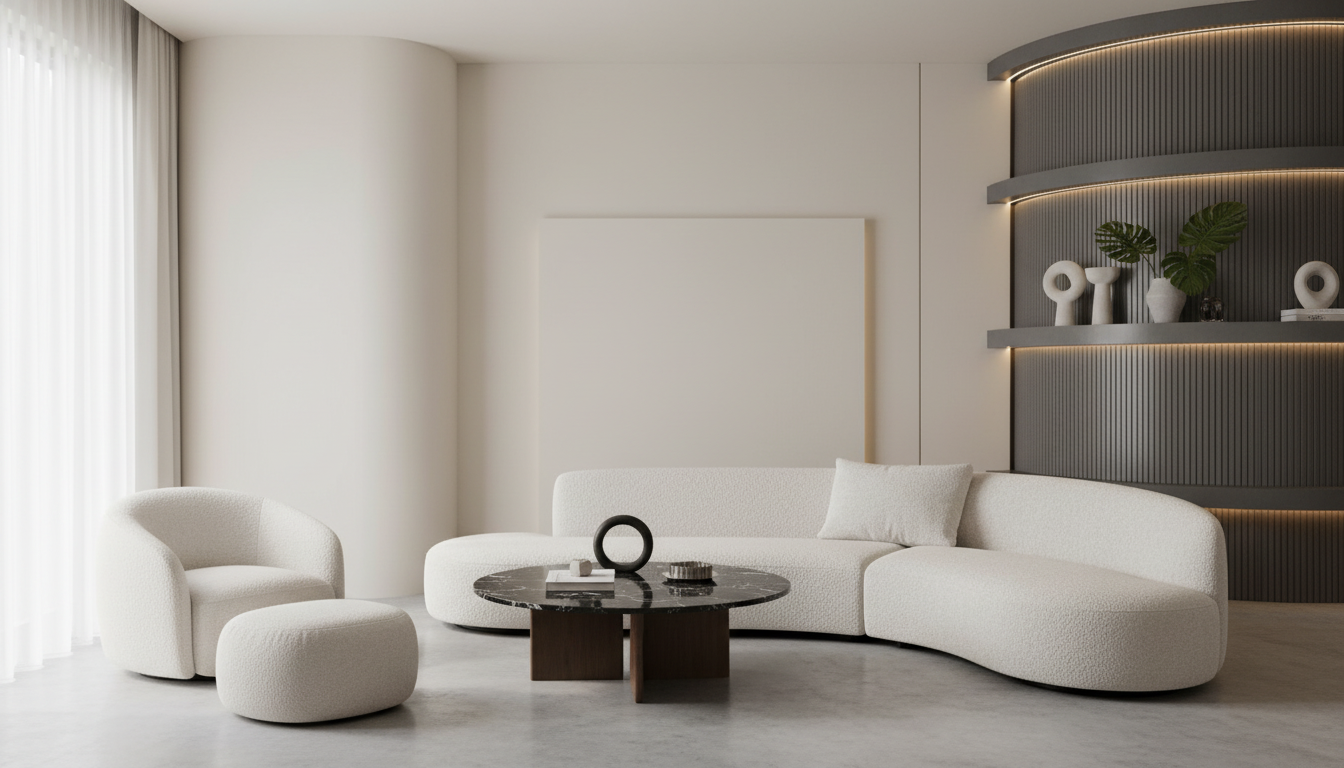
Styling with Curved Furniture: Layout Tips for Sofas, Chairs, and Rounded Silhouettes
Curved furniture softens sharp floor plans, improves circulation paths, and adds a sculptural focal point. The challenge is keeping the room functional: curves need breathing room, clear walkways, and the right counterbalance from straight lines. This guide breaks down where rounded pieces work best, how to anchor them with rugs and lighting, and how to avoid common layout mistakes—especially in smaller or open-plan spaces. For more guidance, see We are talking #trendyortimeless with curved furniture. What do you ….
Why Curves Change the Feel of a Room
- Curves visually slow the eye, making spaces feel calmer and more intentional—less like a grid of corners.
- Rounded silhouettes reduce the “boxy” look in rooms packed with right angles (windows, cabinetry, shelving).
- They can improve traffic flow by guiding movement around seating rather than stopping it with hard edges.
- Curved furniture reads as more sculptural, so fewer pieces can still feel complete and designed.
Design publications regularly highlight rounded forms as a way to soften modern spaces; browse inspiration at Architectural Digest and compare layout approaches to classic arrangements on The Spruce. For further reading, see 45 Refined Living Room Ideas to Dress Up Your Gathering Space.
Start with the Three Anchors: Focal Point, Flow, and Scale
- Focal point: Choose it first (fireplace, TV wall, picture window, statement art) and orient the main curved piece toward it so the curve looks purposeful.
- Flow: Plan circulation before styling. Keep primary walkways clear and consistent from entry to exits—especially through open-plan rooms.
- Scale: Match curve scale to room size. Large radii (gentle arcs) feel calmer; tight curves feel decorative and can crowd small rooms.
- Test the footprint: Use painter’s tape to map the curve. Confirm door swings, drawer pulls, and path widths before committing.
A practical starting point for main pathways is to preserve an easy pass-through that doesn’t force people to “shimmy” between a sofa back and a wall. When in doubt, prioritize walking space first and let accent pieces be the flexible layer.
Placement Rules That Make Curves Look Expensive
- Give curves negative space: Avoid pushing a curved sofa tight into corners unless the design is made for it. A little air around the silhouette makes it feel higher-end.
- Balance with straight lines: Pair a rounded sofa with a rectangular rug or linear console so the room feels grounded rather than overly soft.
- Anchor with the right rug size: Place the front legs of primary seating on the rug; for floating arrangements, consider fitting the full seating group on the rug.
- Dial in clearances: Keep coffee tables within easy reach while preserving walkways around the curve so circulation stays effortless.
- Repeat the shape subtly: Echo the curve in one or two supporting elements (mirror, lamp shade, side table, art) for cohesion without going theme-y.
Quick Placement Guide for Curved Furniture
| Room | Best Placement | What to Avoid | Helpful Pairings |
|---|---|---|---|
| Living Room | Float a curved sofa to face the focal point; create a conversational arc with chairs | Pushing the curve against multiple walls; undersized rug that “cuts off” the silhouette | Rectangular rug, oval/round coffee table, linear media console |
| Dining Area | Use a round/oval table to reinforce flow; keep chairs evenly spaced | Mixing bulky curved chairs with a tiny table; blocking paths to kitchen/doors | Pendant centered over table, slim sideboard with straight lines |
| Bedroom | Curved headboard centered; add round ottoman or bench at foot if space allows | Crowding a curved bed with oversized nightstands | Round mirror, soft-textured bedding, streamlined nightstands |
| Entryway | Small curved console or demilune table for tight spaces | Deep curves that eat circulation space | Wall mirror above, tray for keys, slim lamp |
| Home Office | Curved accent chair in a reading corner; keep desk lines clean | Overfilling the room with multiple curved pieces | Rectangular desk, task lighting, simple shelving |
Coffee Tables, Side Tables, and the “Curve Match”
- If the sofa is strongly curved, choose an oval or round coffee table to maintain reach and visual harmony.
- For subtle curves, a rectangular coffee table can look sharp and tailored—especially with rounded corners.
- Use nesting tables to follow the arc without crowding; they also create flexible landing spots for guests.
- Keep table edges friendly: rounded corners reduce visual clutter and improve comfort near curved seating.
Lighting and Art That Complement Rounded Silhouettes
Color, Texture, and Styling Details That Keep Curves from Feeling Overly Sweet
Common Mistakes and Fast Fixes
Curved Furniture Layout Tips You Can Apply Room by Room
Helpful Digital Guides for Planning Your Layout
- Styling with Curved Furniture | Interior Styling Guide | Digital Download Home Decor Layout Tips | Curved Furniture Placement eBook (digital download)
- How to Pick Dining Chairs Checklist | Digital Download Guide for Choosing the Perfect Dining Room Chairs, Home Decor, Dining Table Seating, Interior Design Tips (digital download)
FAQ
Does curved furniture make a room look smaller?
Not necessarily—curves can actually improve flow and make layouts feel less rigid. Rooms tend to feel smaller only when the curved piece is oversized for the footprint or when tight radii steal usable walkway space; choose a gentler arc and keep a little negative space around the silhouette.
What shape coffee table works best with a curved sofa?
For a strongly curved sofa, an oval or round coffee table typically keeps reach comfortable and echoes the shape. For softer curves, a rectangle with rounded corners can look tailored while still maintaining smooth clearance around the seating.
How far should a curved sofa sit from the wall?
A good guideline is 6–12 inches off the wall for breathing room in most rooms, and 18 inches or more when you want a clear walkway behind it. Some curved designs are meant to sit closer to a wall, so always confirm that circulation paths stay open and consistent.










Leave a comment