Home Decor Style Quiz Checklist: Printable Guide to Your Look
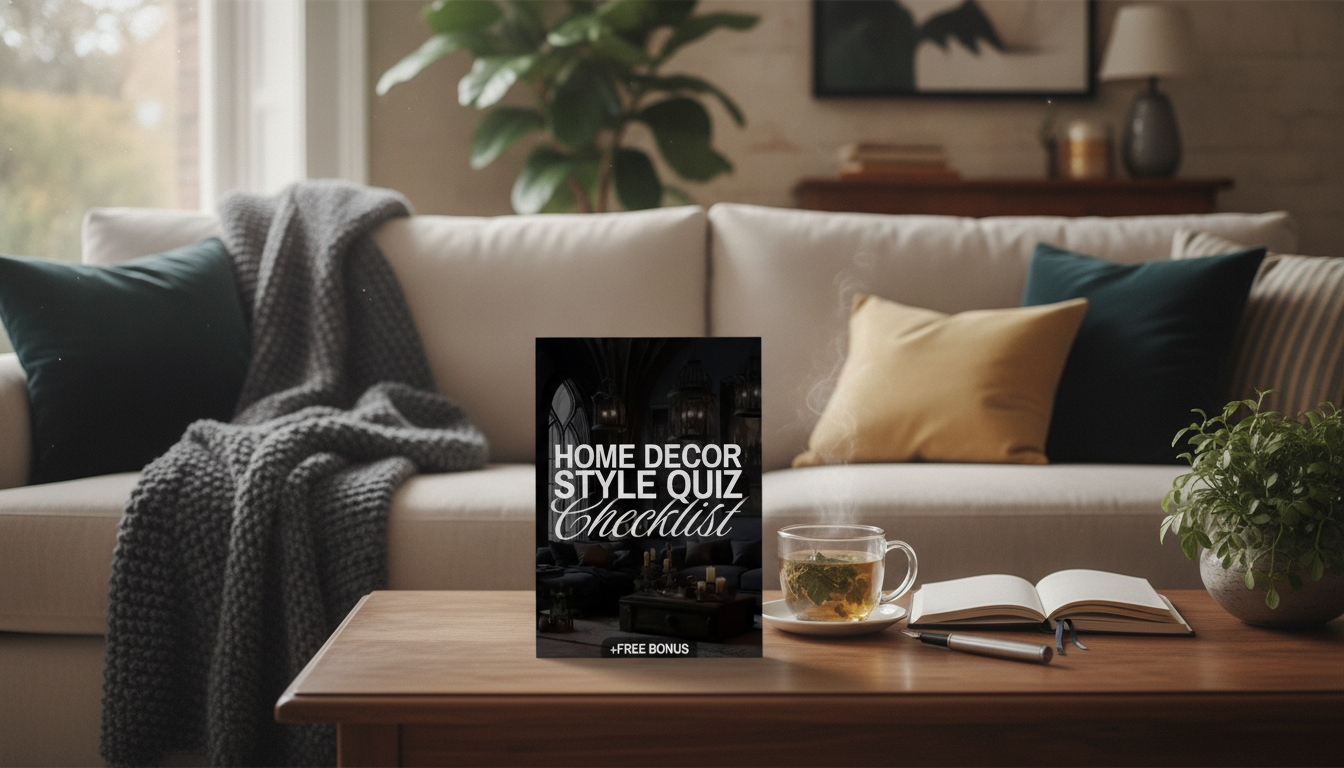
Home Decor Style Quiz Checklist: Find Your Look and Start Decorating with Confidence
Choosing a decorating direction gets easier when the “why” behind preferences is clear. A simple style quiz and checklist can turn scattered inspiration into a focused plan—covering color, materials, furniture lines, and finishing details—so every purchase and DIY choice supports one cohesive look.
What a Home Decor Style Quiz Checklist Does (and Why It Works)
A good quiz doesn’t “label” a home—it organizes decisions. Instead of relying on vibes alone, a checklist helps translate the rooms you love into repeatable rules you can actually shop with.
- Creates clarity by translating likes and dislikes into a consistent style profile
- Reduces impulse buys by setting boundaries for color, texture, and silhouette
- Helps prioritize upgrades (paint, lighting, textiles, layout) before buying decor
- Makes inspiration actionable by turning saved images into repeatable rules
- Supports budget-friendly decorating by focusing on key “signature” elements
These ideas connect directly to foundational design concepts like elements and principles of design (balance, contrast, rhythm, and emphasis). For a quick refresher, see The Elements of Design and the Principles of Design.
Quick Self-Assessment: Your Style Signals
Before picking a label like “modern” or “traditional,” start with what consistently feels right. The goal is to identify patterns in your preferences so the room doesn’t drift as you add pieces over time.
- Look at the rooms and photos that feel calming: note whether they are light/airy, moody, warm, or crisp
- Choose three words for the mood: cozy, tailored, collected, playful, serene, dramatic, organic, or glam
- Identify your tolerance for visual “stuff”: minimal surfaces, curated vignettes, or layered maximalism
- Decide if patterns should be a main character (bold rugs and wallpaper) or a supporting detail (pills and art)
- Pick your comfort zone for contrast: low-contrast neutrals, medium contrast, or high-contrast black/white and strong color
Style Clues Checklist
| Design choice | Option A | Option B | Option C |
|---|---|---|---|
| Overall vibe | Relaxed & casual | Clean & tailored | Bold & expressive |
| Color preference | Soft neutrals | Warm earth tones | High contrast or jewel tones |
| Materials | Natural fibers & wood | Metal, glass, lacquer | Mixed vintage + modern |
| Lines & shapes | Curves and organic forms | Straight lines and symmetry | Statement silhouettes |
| Styling level | Minimal | Curated | Layered |
If color choices feel like the hardest part, a quick overview of color theory basics can help you understand why certain combinations feel calmer, bolder, warmer, or more balanced.
Common Decor Styles and the Details That Define Them
Most homes aren’t a single style—and they don’t need to be. Still, knowing the “tells” of popular looks makes shopping easier because you can spot what belongs (and what doesn’t) at a glance.
- Modern: clean lines, intentional negative space, limited palette, strong geometry
- Scandinavian: light woods, cozy textiles, functional simplicity, soft neutrals
- Minimalist: fewer objects, hidden storage, calm palette, quality over quantity
- Traditional: symmetry, classic furniture shapes, layered textiles, timeless patterns
- Transitional: traditional comfort with cleaner silhouettes and restrained ornament
- Boho: collected objects, global patterns, lots of texture, plants, relaxed vibe
- Industrial: raw materials, exposed metal/brick look, utilitarian forms, darker tones
- Farmhouse (modern or classic): warmth, simple forms, rustic wood accents, approachable comfort
- Coastal: airy palette, natural textures, relaxed seating, light-reflective finishes
- Mid-century modern: tapered legs, warm woods, graphic shapes, retro-inspired accents
When a room feels “almost right,” it’s usually because one or two defining details are missing—like a consistent wood tone family, a repeated metal finish, or a signature fabric texture.
How to Use a Quiz Result Without Feeling Boxed In
A quiz result works best as a starting point: a home base you return to when choices get overwhelming. The freedom comes from having a strong foundation—then adding personality on top.
- Treat the result as a “home base” style, then add 1–2 supporting influences
- Keep the foundation consistent (walls, large furniture, rugs), then experiment with accessories
- Aim for repeatable rules: 2–3 core colors, 2 metal finishes max, and a consistent wood tone family
- Use a “signature trio” to unify rooms: one texture (bouclé/linen/leather), one shape (arches/clean rectangles), one finish (brass/matte black/chrome)
- When mixing styles, connect them through a shared palette and similar scale
Practical example: a modern foundation (simple sofa, low-profile rug, clean lighting) can still feel collected with vintage art and an antique side table—as long as you repeat the same metals and keep the color palette steady.
A Simple Decorating Plan: From Inspiration to a Finished Room
Once your preferences are clear, the room comes together faster because decisions follow a sequence—big moves first, small styling last.
Printable Tools That Make Decorating Easier
Shop Digital Checklists for a More Cohesive Home
- Home Decor Style Quiz Checklist | Digital Download eBook | Interior Design Guide & Printable PDF for Decorating Inspiration ($2.99)
- How to Pick Dining Chairs Checklist | Digital Download Guide for Choosing the Perfect Dining Room Chairs, Home Decor, Dining Table Seating, Interior Design Tips ($5.99)
FAQ
What if the quiz result doesn’t match the style already in the home?
Use the result as a direction for future purchases rather than a full reset. Update gradually through paint, textiles, lighting, and one or two anchor pieces that help the existing items feel more unified.
Can two styles be mixed and still look cohesive?
Yes—choose one primary style and one supporting style, then keep them aligned with a consistent palette, repeated finishes, and similarly scaled furniture. Mixing works best when the “rules” stay steady even if the influences vary.
How often should the checklist be revisited?
Revisit it before major purchases or seasonally. Preferences can shift over time, but a quick review keeps rooms from collecting random colors, mismatched metals, or competing patterns.










Leave a comment